Monday, January 30, 2006

Fanning the Flames of Freedom


I find I’m so excited I can barely sit still to hold a thought in my head. I think it’s the excitement only a free man can feel. A free man at the start of a long journey, whose conclusion is uncertain.
- "Shawshank Redemption"


According to the movie “Shawshank Redemption,” men in prison grow adapted to prison life and lose their desire to live “on the outside.” The emotion expressed by Morgan Freeman’s character in the above quotation is one of renewed freedom, but more importantly renewed hope.

For some reason, I have always been hopeful regarding the future. I tend to enjoy change rather than fear it. I would like to think there are deeply spiritual reasons for this, but in part it’s my personality and upbringing. Nevertheless, hopeful expectation concerning what's to come is the proper response to the promises of God.

A Christian, whether 20 years old or 100 years old (and I’ve met both) can experience this. Certainly, life takes its toll. Things do not go as planned or as desired, and responsibilities weigh us down. Our spiritual vigor comes and goes like the ocean tide, and with it our comprehension of God’s promises. Nevertheless, if we believe a gracious and inexhaustible God is with us, the embers of hope should be kept alive – and sometimes fanned into flames.

For the righteous will never be moved; he will be remembered forever.
He is not afraid of bad news; his heart is firm, trusting in the LORD. Psalm 112:6-7

As it is written: "No eye has seen, no ear has heard, no mind has conceived what God has prepared for those who love him"— but God has revealed it to us by his Spirit. 1 Corinthians 2:9-10

Saturday, January 28, 2006

Life in Context


How often do you place your life in context? Has it ever been placed in context for you? Here are some creative words to this effect:


Last night I dreamed of horses
Coming for my soul
Taking me to places
I wasn't ready yet to go

Last night I dreamed of silence
The silence that I keep
All the things I could've said
Well, they stole away my sleep

I need to remember
The horses will come
I need to remember
How quickly they run...

- From "Horses" by Margaret Becker


***

REMINDER: If you would like to receive weekly updates concerning the site, leave a comment to this effect or email me. Have a great weekend!

Friday, January 27, 2006

Friend for Life

Recently, a French gentleman visited the United States and checked out our culture – including our megachurches. He found it curious that we held to a “new” religion that believes “God is your best buddy.”

Is he?

“Better is open rebuke than hidden love.
Wounds from a friend can be trusted, but an enemy multiplies kisses.” Proverbs 27:5-6

These verses on true friendship assume several things:
1) You have a friend you can trust,
2) You know the difference between a true friend and one who manipulates or flatters you, and
3) You are willing to listen to your friend’s words of rebuke or correction.

So, is God our buddy? I’m not sure a “buddy” fits this description of true friendship. A buddy might be someone we hang out with, but does a buddy tell us the hard truth when we need to hear it?

But God is our friend. After all, our father of faith Abraham was called the “friend of God.” Jesus also told his disciples that he would call them friends, not merely servants (John 15). God is indeed our friend if we trust him, if we come to him through Jesus Christ, and if we allow his words to do their correcting work.

This is sometimes painful – a friend’s rebuke is not compared to “wounds” without reason! But again, he’s not our buddy… he’s our friend.


(Note: The title of this post was grabbed from a song by Margaret Becker I happened to hear as I wrote this post. Not a bad song.)

Thursday, January 26, 2006

Escape from Teen Planet


“Listen to your father who gave you life, and do not despise your mother when she is old.” (Proverbs 23:22)

These words from Proverbs have no doubt been an aching reality in many parents’ souls. After all, the infamous “rebellious teenager” is known for disregarding his father’s or mother’s hard fought wisdom.

Yet who is the real “rebellious teenager” in our world today? After all, God is the one who has given the entire world life – yet he is disregarded or despised by many. The idea that he is indeed our authority is at best a debated point, and more generally rejected outright as unfit for public discussion. The Bible is indeed in the basement. What hope is present for teens today if adults cannot muster up a little respect for the God and Father of us all?

The book of Proverbs is a handbook for wisdom and ethics, and on every page the message presents itself: listen to the wisdom of those around you, resist the wickedness offered by others. Wisdom and wickedness are both personal – rather than impersonal – matters. They involve how we treat others, and they are developed through how we interact with others. But it begins with how we relate to God – his wisdom, instruction, and especially his gospel.

The stakes are high on Teen Planet. If we act like rebellious teenagers in the presence of God, so will the next generation. But if we will listen attentively to God through his word – without rolling our eyes - there is hope.

Wednesday, January 25, 2006

Teen Planet


"Listen to your father who gave you life, and do not despise your mother when she is old." (Proverbs 23:22)

"The father of the righteous will rejoice; he who fathers a wise son will be glad in him." (Proverbs 23:24)

"My son, give me your heart, and let your eyes observe my ways. For a prostitute is a deep pit; an adulteress is a narrow well..." (Proverbs 23:26-27)

At some point over this past century or two, teens were cast into their own world. Although God’s word, and their own deepest longings, warn against this, many teens continue to live lives separated from their parents and the adult world in general.

A recent highly recommended book, “Hurt” by Chap Clark, tells the story of how teens became stranded on teen planet. “Abandoned” is the word Chapman uses to describe parents’ sins against their children – sometimes outright abandonment, but also more subtle forms of role model abdication. Chapman also details the chilling effects of this abandonment.

Yet these effects are also chronicled daily on talk radio and television. Over the past week, I have heard several stories of these stranded teens that wandered into the dark territories of Internet or cell phone (!) pornography, prostitution, or varied forms of abuse. Meanwhile, well-meaning parents who want their children to enjoy increasing freedoms find it hard to release them into such hostile territory.

But wait a minute! Who is shipping all this contraband into the teenagers’ world? Maybe they’re stranded, but clearly they’re not alone...

Monday, January 23, 2006

Who Needs You?

“And he told them a parable to the effect that they ought always to pray and not lose heart.” (Luke 18:1)

An older couple once told me of their prayers for their wayward son. Every day, before the husband left work, they stood in a specific place, held hands, and prayed for him. They did this for years, until one day he returned to faith in Jesus Christ. He eventually became a pastor and discipled me.

It can be easy to give up in prayer, even though Jesus urged us on more than one occasion to keep asking. Let’s face it, we may never know this side of heaven why God doesn’t choose to answer right away. But it’s right there in his word that he likes to set his own time schedule. Maybe, as a friend of mine once said, God just likes to hear us pray! Or maybe it’s for our sake – perhaps we need the transformation of heart and priorities that long term prayer brings about.

If there is someone in your life that you are concerned for spiritually, whether they have abandoned the faith or never truly embraced it, I encourage you to follow the example above. Pray for them daily. Form a habit by praying at a certain time of day, as this couple did, or create some other reminder. In any case, pray regularly and earnestly for them.

They need it. And apparently we do too.

Saturday, January 21, 2006

The Original Martin Luther


I began this week by looking at Martin Luther King, Jr. I close it by looking at the original Martin Luther.

What is impressive to me about Martin Luther, flawed saint and hero of the Protestant Reformation, is the utter fear he had of a holy God. Prior to his conversion, he wrote, he nearly killed himself with vigils, prayers, and self-abuse, all in an effort to atone for his sins. He was not content, as his superiors insisted, to "relax" about his relationship to God. How could he relax before a holy, just, all seeing God?

It was only when Luther discovered the gospel, that our sins could be forgiven through Jesus' sacrifice (not ours!), that he found rest. It was this discovery that led to the Reformation. It also explains why Luther had such boldness in the face of his enemies -- he feared God so much, he had flushed the fear of others out of his system. His confidence revealed that he knew God's opinion was really all that mattered.

Certainly Luther had his flaws. But we live in a different age, with its own flaws, and can certainly learn from some of his strengths.

Most urgently: Where do we find rest? Are we "relaxed" before God because we figure he's a nice Grandpa in the sky -- or because we have found sure footing for our forgiveness in Jesus Christ?

"In the year that King Uzziah died I saw the Lord sitting upon a throne, high and lifted up; and the train of his robe filled the temple. Above him stood the seraphim. Each had six wings: with two he covered his face, and with two he covered his feet, and with two he flew. And one called to another and said: "Holy, holy, holy is the LORD of hosts; the whole earth is full of his glory!" ... And I said: "Woe is me! For I am lost; for I am a man of unclean lips, and I dwell in the midst of a people of unclean lips; for my eyes have seen the King, the LORD of hosts!" (From Isaiah 6)

Come to me, all who labor and are heavy laden, and I will give you rest. Take my yoke upon you, and learn from me, for I am gentle and lowly in heart, and you will find rest for your souls. (Jesus, from Matthew 11)

Thursday, January 19, 2006

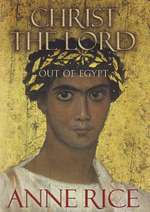
Christ the Lord?


Anne Rice, whose previous books include Interview with a Vampire and Queen of the Damned, recently converted to Christianity. I believe she is Roman Catholic now. Her recent novel is entitled Christ the Lord. In an afterward, she tells the fascinating story of her research into the truth about Jesus. She compared the scholarship of those who did, and those who did not, accept the historical reliability of the biblical gospels.

After all, “Jesus scholars” come in many varieties. Those who appear on television speaking about the “historical Jesus” often hold views hostile the historic Christian faith of Matthew, Mark, Luke, and John. (It is a radical branch of this type of “scholarship” that undergirds the radically popular Da Vinci Code novel.)

Here is how Ann Rice describes the surprise she felt when she found that many who were known as "Jesus scholars" were actually hostile to him:

"Many of these scholars, scholars who apparently devoted their life to New Testament scholarship, disliked Jesus Christ. Some pitied him as a hopeless failure. Others sneered at him, and some felt an outright contempt. This came between the lines of the books. …

"I’d never come across this kind of emotion in any other field of research, at least not to this extent. It was puzzling.

"The people who go into Elizabethan studies don’t set out to prove that Queen Elizabeth I was a fool. They don’t personally dislike her. They don’t make snickering remarks about her, or spend their careers trying to pick apart her historical reputation. … Occasionally a scholar studies a villain, yes. But even then, the author generally ends up arguing for the good points of a villain or for his or her place in history, or for some mitigating circumstance, that redeems the study itself. … [I]n general, scholars don’t spend their lives in the company of historical figures they openly despise." (Christ the Lord, p.314)


It is important for believers and unbelievers alike to recognize that scholarship – at least “Jesus scholarship” – is not free from bias. Is it even possible to be unbiased concerning a historical figure who demanded an answer to the question, “Who do you say that I am?”

Wednesday, January 18, 2006

Proverbs 18

Proverbs 18 has long been a favorite of mine. As a “people person” I am drawn to the many proverbs here concerning healthy (and not so healthy) human interaction. Most of these listed below concern how (and when) we speak; a few concern friendship and marriage.

Proverbs aren’t meant to be scanned quickly, but pondered and applied. So if you are struck by a particular verse, I invite you to mull it over today; and, most important, put its wisdom to good use.

Whoever isolates himself seeks his own desire; he breaks out against all sound judgment. (Proverbs 18:1)

A fool takes no pleasure in understanding, but only in expressing his opinion. (18:2)

A fool's lips walk into a fight, and his mouth invites a beating. (18:6)

The words of a whisperer [i.e. gossip] are like delicious morsels; they go down into the inner parts of the body. (18:8)

If one gives an answer before he hears, it is his folly and shame. (18:3)

The one who states his case first seems right, until the other comes and examines him. (18:17)

Death and life are in the power of the tongue, and those who love it will eat its fruits. (18:21)

He who finds a wife finds a good thing and obtains favor from the LORD. (18:22)

The poor use entreaties, but the rich answer roughly. (18:23)

A man of many companions may come to ruin, but there is a friend who sticks closer than a brother. (18:24)

Tuesday, January 17, 2006

Misadventures on the Road to Social Justice


While writing yesterday's post concerning Amos 5:24, I kept thinking about the connection between these two verses:

But let justice roll down like waters, and righteousness like an ever-flowing stream. (Amos 5:24)

Whoever believes in me, as the Scripture has said, "Out of his heart will flow rivers of living water." (Jesus in John 7:38)

It seems there are at least three kinds of mistakes we can make when attempting to serve those in need.

1. It is a mistake to try to serve the needy apart from Christ as our motivation and source of strength. It is faith in him that should produce "rivers of living water." The needy might receive some help even if we possess an ungodly attitude, but we lose out...and burn out.

2. It is also a mistake to try to serve others with unbiblical methods, or an unbiblical message. If faith in Jesus produces rivers of living water from us, he will be our message -- whether explicitly or implicitly.

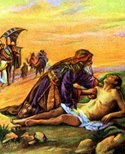
3. But another mistake is to do nothing. That's the lesson of the Jesus' parable of the Good Samaritan in Luke 10. Jesus said that the man on the side of the road was avoided by a priest and a Levite, apparently for religious, ethical, and/or nationalistic reasons. Jesus clearly wasn't so pleased with this outcome, as we know.

As weak human beings, we will feel that we do not live up to #1 and #2. But to fall into the inaction of #3 is certainly not God's will. Therefore, let us take courage, knowing that if our faith is in Jesus we ARE equipped to serve others. Our misadventures will be forgiven -- so let's venture forth!

Monday, January 16, 2006

Martin, Amos, and Us


There are those who are asking the devotees of civil rights, "When will you be satisfied?" We can never be satisfied as long as the Negro is the victim of the unspeakable horrors of police brutality. We can never be satisfied, as long as our bodies, heavy with the fatigue of travel, cannot gain lodging in the motels of the highways and the hotels of the cities. We can never be satisfied as long as a Negro in Mississippi cannot vote and a Negro in New York believes he has nothing for which to vote. No, no, we are not satisfied, and we will not be satisfied until justice rolls down like waters and righteousness like a mighty stream. - Martin Luther King, Jr., “I Have A Dream”

“I hate, I despise your feasts, and I take no delight in your solemn assemblies. Even though you offer me your burnt offerings and grain offerings, I will not accept them; and the peace offerings of your fattened animals, I will not look upon them. Take away from me the noise of your songs; to the melody of your harps I will not listen. But let justice roll down like waters, and righteousness like an ever-flowing stream.” - God, Amos 5:21-24


On the holiday commemorating Martin Luther King, Jr., I have chosen to quote his famous speech – along with another famous speech which he references, the speech of the prophet Amos.

God is saying through Amos that he has come to hate and despise the way he is worshiped. Very strong language – language we would not want to hear! It is important to remember that God himself instituted the very feasts and sacrifices he now abhorred. Why could he could no longer bear them? Because they were done as a mere ritual, and not from the heart.

But the sign that our religion issues from the heart, according to this passage and others, is not simply that we feel emotional about our worship. I’m sure those of Amos’ day could feel pretty emotional about their worship – with all the food, smoke, blood, and songs, it would seem hard not to. Religion from the heart is marked, instead, by whether “justice” and “righteousness” flow from our lives like “an ever-flowing stream.” Based on Amos, this involves our treatment of others in many ethical areas, including economics, sexuality, and treatment of the underprivileged.

This thought is expressed succinctly by the Apostle John:

If anyone says, “I love God,” and hates his brother, he is a liar; for he who does not love his brother whom he has seen cannot love God whom he has not seen. And this commandment we have from him: whoever loves God must also love his brother. (1 John 4:20-21)

Amos is an important reminder that love is more than a feeling. Martin Luther King, Jr.’s speech remains an important reminder that there are plenty of people who need our love, if we are willing to open our eyes to their needs.

Saturday, January 14, 2006

Is the Right Way Right?

Three verses are listed below. The first will be familiar to many, but notice how all three fit together:

There is a way that seems right to man,
but its end is the way to death. (Proverbs 14:12)

In the fear of the Lord one has strong confidence,
and his children will have a refuge. (14:26)

The fear of the Lord is a fountain of life,
that one may turn away from the snares of death. (14:27)


The safest path to travel isn't the one that first appears to us. And the most important gift to our children is not something that can be bought with money. Praise God for parents who are concerned to teach their children to fear the Lord, more than with so many secondary successes.